 Doyen Altair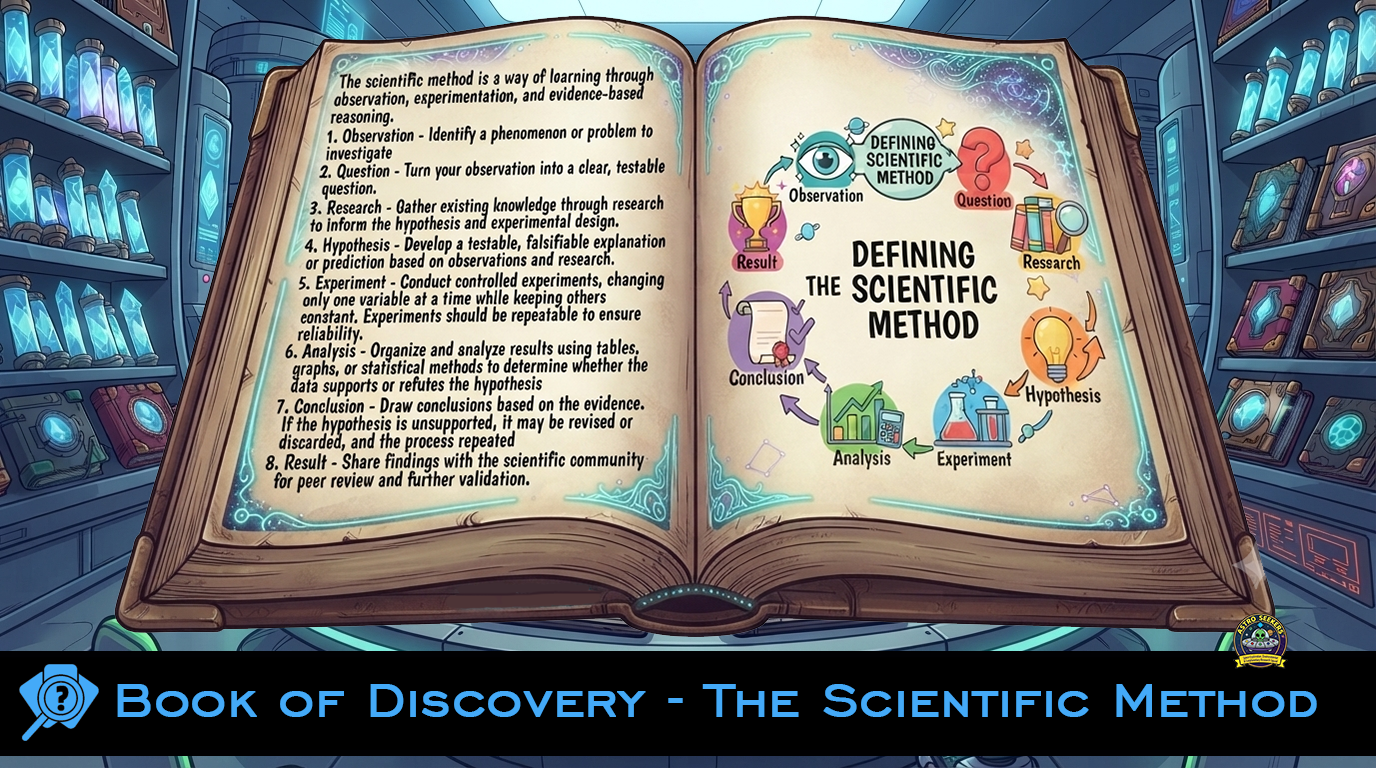
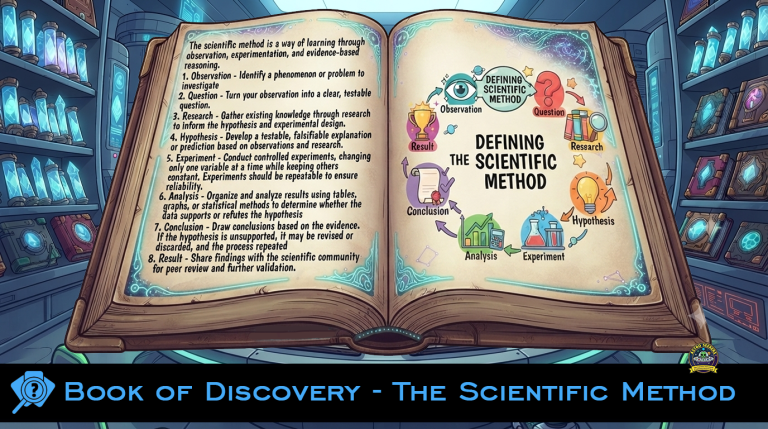
The scientific method is a systematic way of learning through observation, experimentation, and evidence-based reasoning. It provides a logical framework scientists use to ask questions, develop explanations, and test ideas.
1. Observation – Identify a phenomenon or problem to investigate
2. Question – Turn your observation into a clear, testable question.
3. Research – Gather existing knowledge through research to inform the hypothesis and experimental design.
4. Hypothesis – Develop a testable, falsifiable explanation or prediction based on observations and research.
5. Experiment – Conduct controlled experiments, changing only one variable at a time while keeping others constant. Experiments should be repeatable to ensure reliability.
6. Analysis – Organize and analyze results using tables, graphs, or statistical methods to determine whether the data supports or refutes the hypothesis
7. Conclusion – Draw conclusions based on the evidence. If the hypothesis is unsupported, it may be revised or discarded, and the process repeated
8. Result – Share findings with the scientific community for peer review and further validation.
About The Author

 Rigel
Rigel 
 Aurora